
Talk Schedule
| Session | Tuesday 18/08/2026 | Wednesday 19/08/2026 | Thursday 20/08/2026 | Friday 21/08/2026 |
|---|---|---|---|---|
| Morning | 10:00–11:00 Nick Jennings Research Excellence Award | 09:00–10:00 Barbara Plank NLP | 09:00–10:00 Tinne Tuytelaars Computer Vision | 09:00–10:00 Jan Peters Robotics |
| Midday | 11:30–12:30 Jeroen Delfos EU AI Act · Hanse · Parallel to technical sessions | |||
| Afternoon | 14:00–15:00 Luciano Serafini Neuro-Symbolic AI | 14:00–15:00 David Parkes John McCarthy Award | 14:00–15:00 Jiajun Wu Computers and Thought Award | 14:00–15:00 Georgina Curto IJCAI in the world |

Nick Jennings
Abstract: Agentic AI has rapidly emerged as one of the most prominent themes in contemporary artificial intelligence. In this lecture, I will trace the evolution of the field from its early conceptual foundations through to today’s large-scale AI agents and agent ecosystems, highlighting the key scientific advances that have enabled this transformation.
Looking ahead, I will argue that the next major frontier for agentic AI lies not simply in creating more capable individual agents, but in understanding and engineering the social dimensions of intelligence. In particular, I will explore how cooperation, coordination, negotiation, and collective decision-making can enable effective partnerships among multiple AI systems and between humans and AI.
Bio: Nick Jennings is the Vice-Chancellor and President of Loughborough University. His research focuses on the theory and practice of multi-agent systems, developing methods for cooperation, coordination and negotiation that have been used to save lives in the aftermath of disasters, to win Olympic medals, and to monitor the impact of climate change on glaciers.

Luciano Serafini
Abstract: Neuro-symbolic AI combines neural networks’ learning abilities with symbolic logic’s reasoning power. In this talk, I will provide an overview of the main motivations, research challenges, and methodologies in neuro-symbolic AI, then focus on Logic Tensor Networks, a neuro-symbolic framework that grounds first-order logic in differentiable learning systems.
Bio: Luciano Serafini is a Principal Researcher and Head of the Data and Knowledge Management Research Unit at Fondazione Bruno Kessler in Trento, Italy. His research spans knowledge representation and reasoning, probabilistic inference, neuro-symbolic AI, and autonomous agents. He is one of the inventors of Logic Tensor Networks and was named EurAI Fellow in 2020.
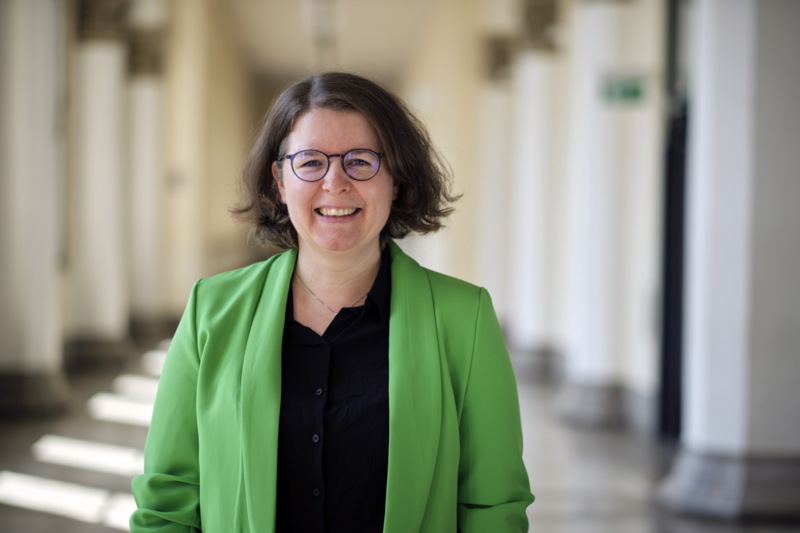
Barbara Plank
Abstract: Artificial Intelligence has achieved remarkable progress, with increasingly capable systems now supporting decisions, generating knowledge, and interacting with humans at unprecedented scale. Yet much of modern AI continues to rely on a powerful simplifying assumption: that for every problem there exists a single correct answer, a single ground truth.
In this talk, I will argue that this assumption is often at odds with the complex, ambiguous, and inherently human environments in which AI operates. Drawing on research on human disagreement, ambiguity, and the evaluation of foundation models, I will show that variation is frequently not noise to be eliminated, but signal to be understood.
Bio: Barbara Plank holds the Chair for AI and Computational Linguistics at LMU Munich, where she is co-director of the Center for Information and Language Processing and head of the MaiNLP research lab; she is also a visiting professor at the IT University of Copenhagen. She is an ELLIS Fellow and currently President of the Association for Computational Linguistics.

Jeroen Delfos
Affiliation: European Commission, DG CNECT A/2
Abstract: With enforcement of the rules starting on the 2nd of August, the EU AI Act is more topical than ever. The AI Act aims to ensure that AI in the EU is safe and can be trusted and adopted by consumers. In this talk, Jeroen Delfos will explain how the AI Act does this, and how academics and the industry can participate in shaping the implementation of the law.
Bio: Jeroen Delfos is a technology specialist at the European Commission’s AI Office, where he supports the implementation of the EU AI Act. He is, amongst other things, involved in the development of standards, Commission guidelines, and coordinating market surveillance for enforcement of the AI Act. Before joining the European Commission, he was a data scientist in the Dutch Ministry of Justice and Security.

David C. Parkes
Abstract: John McCarthy helped launch the field of artificial intelligence by asking a foundational question: How can we build an intelligent agent? Today, remarkable progress on that question has produced AI systems with increasingly broad and useful capabilities. Yet as these systems interact with one another at scale, a new question arises: How can we build societies of intelligent agents?
In this lecture, I will reflect on the traditions and science of multi-agent AI, tracing ideas from the early vision of agent interaction to modern work in computational mechanism design and differentiable economics. I will argue that, in a world populated by many AI agents, collective intelligence does not emerge from capable agents alone. It depends on the design of the mechanisms, incentives, and institutions that govern their interactions. I will conclude by outlining some of the open problems that remain to be solved as we move from intelligent agents to agent societies.
Bio: David C. Parkes is the dean of the Harvard John A. Paulson School of Engineering and Applied Sciences and the George F. Colony Professor of Computer Science. A Fellow of the AAAS, ACM, and AAAI, he is a pioneer in computational mechanism design and a leading researcher in AI and economics, multi-agent AI, and market design. His work has helped establish the foundations for designing incentives, mechanisms, and institutions for intelligent systems. Before becoming dean, he chaired the computer science area and co-directed the Harvard Data Science Initiative. Parkes earned his M.Eng. from the University of Oxford and Ph.D. in Computer and Information Science from the University of Pennsylvania.

Tinne Tuytelaars
Abstract: Deep learning has sometimes been referred to as representation learning: it’s all about transforming raw inputs into gradually more abstract and useful representations. For visual data (images and video), this means turning pixels into latent token representations. When deep learning models were trained for specific tasks, this led to powerful image representations optimized for the task at hand (e.g. classification or segmentation). In the current era of foundation models, however, the interpretation is less clear. Foundation models are trained using self-supervision (e.g. Dino-v2) or via alignment with text models (e.g. CLIP, multimodal LLMs). With self-supervision, we optimize for a proxy-task, that may not learn the optimal representation at all. With language supervision, we may focus too much on high-level semantics, rather than low-level cues such as spatial relations or exact configuration, making the models better at ‘saying’ than at ‘doing’. So what constitutes a good visual representation ? In this talk, I’ll elaborate on a few recent works from our lab attempting to answer that question.
Bio: Tinne Tuytelaars is a full professor at KU Leuven and a leading researcher in computer vision and artificial intelligence. Her research focuses on image and video understanding, multimodal AI, and continual learning. She is passionate about building AI systems that can learn continuously and adapt to new situations, as well as moving towards genuine image and video understanding. She received two ERC grants, the Koenderink test of time award, and various other prizes. She has been program co-chair for ECCV14 and CVPR21 and general co-chair for CVPR16.

Jiajun Wu
Abstract: Much of our visual and physical world has its intrinsic structure: scenes are composed of objects; objects possess their own geometry, texture, material, and physical properties; complex tasks can be composed hierarchically into simpler steps. How can we infer, represent, and use such intrinsic “code” from raw perceptual data, without hampering the expressiveness of neural networks?
In this talk, I will discuss our recent efforts on scene understanding, reconstruction, generation, and interaction, and their connections to such physical code. I will introduce and contrast two technical paths: leveraging intrinsic code as powerful inductive biases vs. grounding pre-trained foundation models onto such intrinsics.
Bio: Jiajun Wu is an Assistant Professor of Computer Science and, by courtesy, of Psychology at Stanford University, working on computer vision, machine learning, robotics, and computational cognitive science. Before joining Stanford, he was a Visiting Faculty Researcher at Google Research. He received his PhD in Electrical Engineering and Computer Science from the Massachusetts Institute of Technology. Wu’s research has been recognized through the Young Investigator Programs by ONR and AFOSR, the NSF CAREER award, the Okawa research grant, AI’s 10 to Watch by IEEE Intelligent Systems, and awards from ACM, AAAI, MIT, Microsoft, Google, Nvidia, J.P. Morgan, Samsung, Amazon, and Meta.
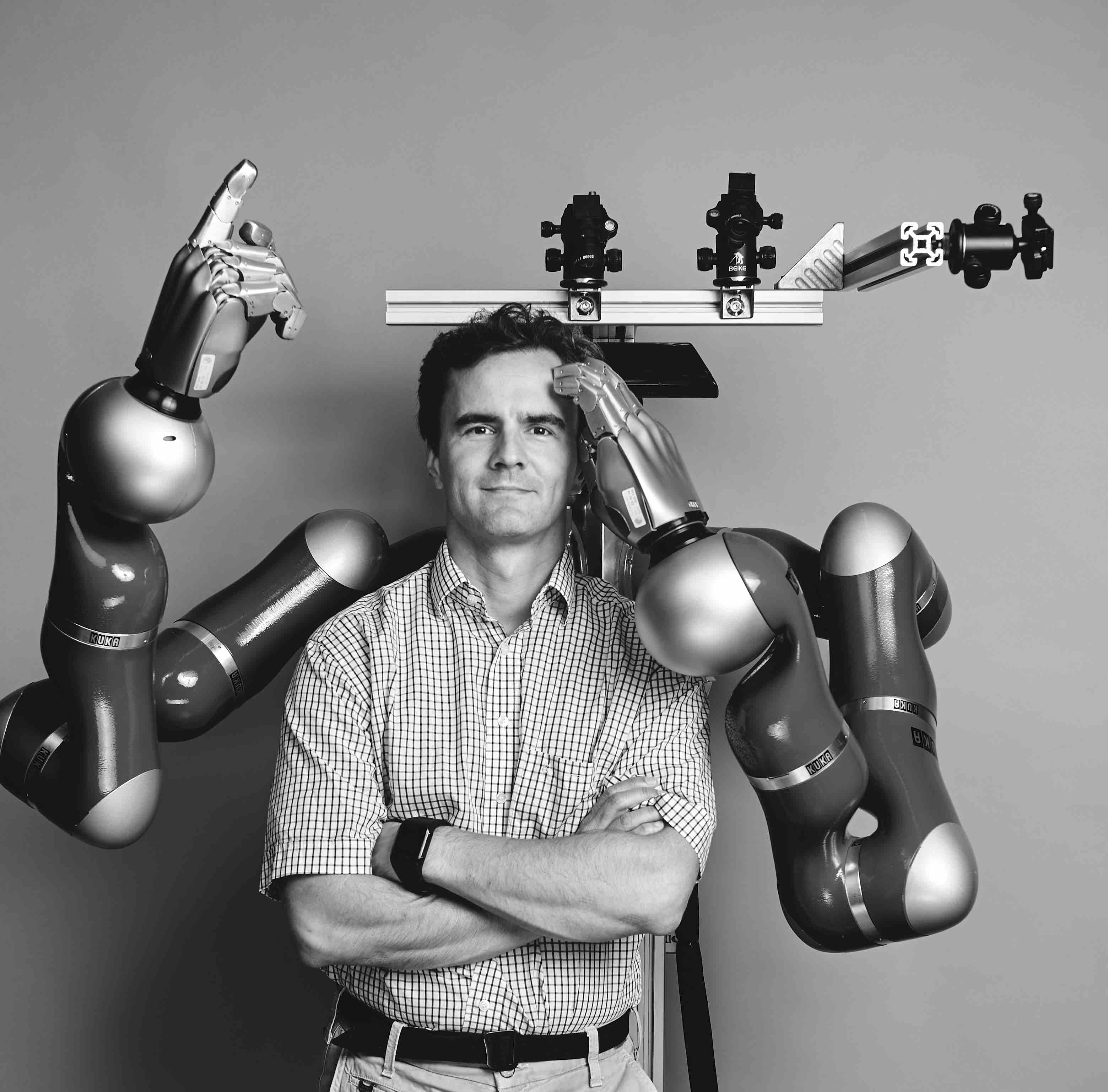
Jan Peters
Abstract: Autonomous robots that can assist humans in situations of daily life have been a long standing vision of robotics, artificial intelligence, and cognitive sciences. A first step towards this goal is to create robots that can learn tasks triggered by environmental context or higher level instruction. However, learning techniques have yet to live up to this promise as only few methods manage to scale to high-dimensional manipulator or humanoid robots. In this talk, we investigate a general framework suitable for learning motor skills in robotics which is based on the principles behind many analytical robotics approaches. To accomplish robot reinforcement learning learning from just few trials, the learning system can no longer explore all learn-able solutions but has to prioritize one solution over others – independent of the observed data. Such prioritization requires explicit or implicit assumptions, often called ‘induction biases’ in machine learning. Extrapolation to new robot learning tasks requires induction biases deeply rooted in general principles and domain knowledge from robotics, physics and control. Empirical evaluations on a several robot systems illustrate the effectiveness and applicability to learning control on an anthropomorphic robot arm. These robot motor skills range from toy examples (e.g., paddling a ball, ball-in-a-cup) to playing robot table tennis, juggling and manipulation of various objects.
Bio: Jan Peters is a full professor (W3) for Intelligent Autonomous Systems at the Computer Science Department of the Technische Universitaet Darmstadt since 2011, and, at the same time, he is the dept head of the research department on Systems AI for Robot Learning (SAIROL) at the German Research Center for Artificial Intelligence (Deutsches Forschungszentrum für Künstliche Intelligenz, DFKI) since 2022. He is also is a founding research faculty member of the Hessian Center for Artificial Intelligence. Jan Peters has received the Dick Volz Best 2007 US PhD Thesis Runner-Up Award, the Robotics: Science & Systems – Early Career Spotlight, the INNS Young Investigator Award, and the IEEE Robotics & Automation Society’s Early Career Award as well as numerous best paper awards. In 2015, he received an ERC Starting Grant and in 2019, he was appointed IEEE Fellow, in 2020 ELLIS fellow and in 2021 AAIA fellow. Despite being a faculty member at TU Darmstadt only since 2011, Jan Peters has already nurtured a series of outstanding young researchers into successful careers. These include new faculty members at leading universities in the USA, Japan, Germany, Finland and Holland, postdoctoral scholars at top computer science departments (including MIT, CMU, and Berkeley) and young leaders at top AI companies (including Amazon, Boston Dynamics, Google and Facebook/Meta). Jan Peters has studied Computer Science, Electrical, Mechanical and Control Engineering at TU Munich and FernUni Hagen in Germany, at the National University of Singapore (NUS) and the University of Southern California (USC). He has received four Master’s degrees in these disciplines as well as a Computer Science PhD from USC. Jan Peters has performed research in Germany at DLR, TU Munich and the Max Planck Institute for Biological Cybernetics (in addition to the institutions above), in Japan at the Advanced Telecommunication Research Center (ATR), at USC and at both NUS and Siemens Advanced Engineering in Singapore. He has led research groups on Machine Learning for Robotics at the Max Planck Institutes for Biological Cybernetics (2007-2010) and Intelligent Systems (2010-2021).

Georgina Curto
Abstract: This session highlights the impact of the IJCAI in the World initiative and invites community participation. Over the past three years, IJCAI has supported mentoring sessions, panel discussions, calls for papers, and academic presentations across South Africa, Senegal, Rwanda, Uganda, and Nigeria. Local partners—including the Southern Africa Conference on AI and the Deep Learning Indaba, in collaboration with the United Nations University—hosted these events. At the recent IJCAI AI Symposium in Nigeria (hosted at the Deep Learning Indaba), the event received 175 submissions from 34 countries (26 in Africa), being led Nigeria, Ethiopia, and Kenya the most represented. Accepted papers will appear in a special IJCAI proceedings volume. Join us to share your ideas, help expand the initiative, and make AI research accessible to all.
Bio: Georgina Curto has served as the Chair of the IJCAI Symposia in the Global South for the past three years.
She is the Acting Head of Research at the United Nations University Institute in Macau and the Principal Investigator for international research projects on multi-agent systems that support decision-makers in inclusive development across Southeast and West Asia, Africa, the US, and Europe. Georgina also volunteers in the organizing committee of the pan-African Deep Learning Indaba and in several other non-profit organizations.
Previously, she co-chaired the IJCAI AI and Social Good Track, where her work was recognized with a Best Project Award in 2022. Prior to joining the UN University, she was an Assistant Research Professor at the Lucy Family Institute for Data and Society at the University of Notre Dame, a Visiting Scholar at UC Berkeley’s Kavli Center for Ethics, Science and the Public, and a Postdoctoral Researcher at the ND-IBM Technology Ethics Lab.